
What is astrology? From Ancient Predictions to Daily Horoscopes
It’s too negative; it’s not real. It’s a waste of bloody time!
No, it’s not really a waste of time. And it can be positive and negative. depending on your mindset
But overall astrology is complex and also can be contradictory.
Nevertheless, astrology consists of the calculations of planets (and asteroids/symbols), signs, aspects, houses (morden astrology), and charts.
However, planets, signs, stars, and symbols are not bearers of conflict, passion, or a mundane existence; rather, the sky mirrors situations occurring in our lives at a point in time.
If two planets are in a position of tension and they are in a particular area of our chart, they’re not causing tension in our life; it’s just reflecting it. Basically, the planets do not control our lives; we can exercise free will and choose our own path.
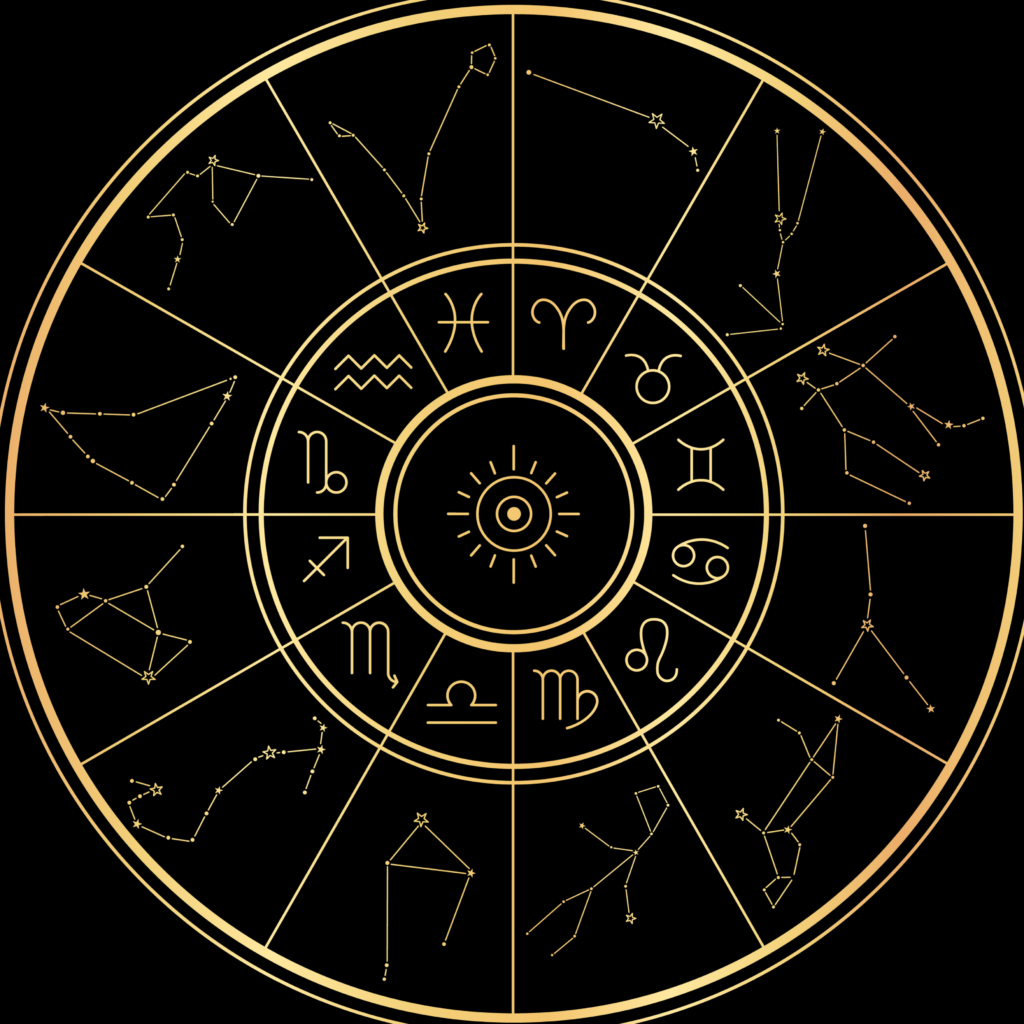
The symbols in the sky are brought down to earth by housing them in a chart which resembles what some people call a wheel, a clock, or a compass.
An astrology chart is, in fact, a map to point us to our potential in life. It’s meant to guide us to what may lie ahead but give as a date.
How the twelve-sign horoscope became modern astrology content
Theodor W. Adorno was a Jewish German philosopher. And part of an intelligencia of the Frankfurt School.
His Wikipedia page says, “He left Germany in 1934 after the Nazis came to power and eventually settled in the United States.”
Further down the line between November 1952 and February 1953, Adorno examined the daily horoscope column written by Carroll Righter for the Los Angeles Times.
The work he did was featured as an article in his book The Stars Down to Earth. The column he examined had divided readers into the twelve zodiac signs. You didn’t need to know your birth time, rising sign, Moon sign or planetary placements.
This was radical because you simply needed to know which zodiac sign the Sun occupied when you were born.
Although sun-sign astrology existed long before the 1930s, what became popular around the 1930s was the modern newspaper format of giving all twelve zodiac signs their own regular horoscope predictions.
Adorno noticed something important about this approach.
The newspaper didn’t explain how the astrologer arrived at the predictions. It didn’t show readers the planetary positions, calculations or astrological reasoning behind the advice. Instead, readers were simply presented with the finished product:
- Aries was told what to expect.
- Taurus was given advice about relationships or work.
- Gemini received instructions about how to approach the day.
- Cancer was given its own set of predictions.
And so on, through all twelve signs.
In other words, readers weren’t being invited to understand astrology. They were being asked to consume its conclusions.
The modern newspaper horoscope format developed during the early twentieth century.
A few important developments:
| Period | What happened |
|---|---|
| 1910s | Newspapers began publishing horoscopes, initially focusing on famous people’s birth charts and daily predictions. |
| 1930 | Astrologer R.H. Naylor published a horoscope for Princess Margaret in Britain’s Sunday Express. Its popularity helped establish regular newspaper horoscope columns. |
| 1930s | The twelve-paragraph format developed, giving each Sun sign its own prediction. |
| 1933 | American Astrology, a monthly magazine, helped popularise the format. |
| 1960s | Horoscopes became standard features in women’s magazines. |
| Internet era | Astrology expanded into weekly and monthly forecasts, relationship content, personality articles, quizzes, social media and lifestyle features. |
Adorno linked his findings to Germany through his experiences of Nazism, fascism, propaganda and authoritarianism.
He was interested in understanding how ordinary people could become psychologically dependent on powerful systems, accept instructions from authority figures and gradually lose the habit of questioning what they were being told.
His argument was that the same psychological tendencies could exist in apparently ordinary aspects of everyday life, including newspaper horoscopes.
Martin Bauer and John Durant – Belief in Astrology: A Social-Psychological Analysis counterargument to Adorno was people might turn to astrology not because they want to surrender their independence, but because it helps them make sense of an uncertain world.
Beyond Sun Sign Astrology
Plato wrote about astrology back in 365 BC.
In Timaeus, Plato describes the universe as a living, intelligent and harmonious creation.
He believed that the heavenly bodies were not moving randomly. Their movements reflected an underlying mathematical and cosmic order.
He also believed that the planets and stars were divine living beings.
For Plato, studying the heavens was a way of understanding the organisation and intelligence of the universe.
You become more successful when you begin to search for personal meaning in information being presented.
believed that the Sun, Moon and planets helped establish and measure time.
In Timaeus, he describes time as an image of eternity, brought into existence alongside the movements of the heavenly bodies.
The regular movements of the planets provide a way of understanding cycles, periods and the passage of time.
This is an interesting philosophical foundation for astrology because it connects celestial movements with the timing and organisation of earthly existence.
Plato was critical of astrology without proper understanding He criticises attempts to interpret these movements without proper astronomical calculations and models.
- Twelve signs (most important – rising, sun, and moon signs)
- Ten Planets (including the luminary, the Sun)
- Aspects (conjunctions, stelliums)
- Minor
- The Chart
- The Houses (modern component)
Astrology & Timing
The more you delve into astrology, the less you care about personalities; your focus slowly shifts to simple astrology i.e. star signs, and you become more concerned about TIMING!
You can get more personal satisfaction from learning astrology if you can understand more about who you are and how your overall life may pan out and important dates (related to change) to look out for.
It’s the smaller details that matter, and understanding planets (aspects) and transits helps to break down life events.
Like the weather, astrology describes conditions that can affect us all, but we won’t necessarily experience them in exactly the same way or at exactly the same time.
For example, a weather forecast might predict rain across a particular city. Someone in one neighbourhood might experience heavy rainfall at 2pm, while someone a few miles away experiences only light showers slightly later. Both are experiencing the same general weather conditions, but their location and timing make a difference.
Astrology works in a similar way.
Two people might share the same Sun sign or experience the same planetary transit, but their individual birth charts can indicate different areas of life being affected, different experiences and even different timings.
One person might encounter a significant development in their career, while another experiences changes in their relationships or home life. Even when similar themes emerge, they may unfold differently for each person.
This is why understanding the finer details of your birth chart matters. Astrology is not simply about identifying your zodiac sign; it is about understanding how planetary conditions relate to your individual circumstances, helping you recognise recurring patterns, understand your natural talents and anticipate potential developments in your life.
Birth-time uncertainty as a genuine problem
The zodiac is ancient Babylonian in origin; the twelve-house system emerged later, during Hellenistic astrology. They developed as astrologers began dividing the sky relative to the horizon and meridian at the moment of birth, creating a system for interpreting different areas of life.
However, most people in the ancient world did not have a birth chart with twelve accurately calculated houses.
Today most people know their time of birth but some people still do not know their exact birth time; rising sign and house placements are very different from the historical reality of astrology. For much of its history, astrology did not depend on everyone knowing their Ascendant.
The modern emphasis on personalised birth charts has become much more accessible because of widespread birth registration, recorded birth times and computerised chart calculations.


